
Ontario Headlight Rules: When to Turn Your Lights On and Dim Them
Daytime running lights are not enough at night. Here are the Ontario headlight rules: when to switch them on, and when to dim your high beams for other drivers.

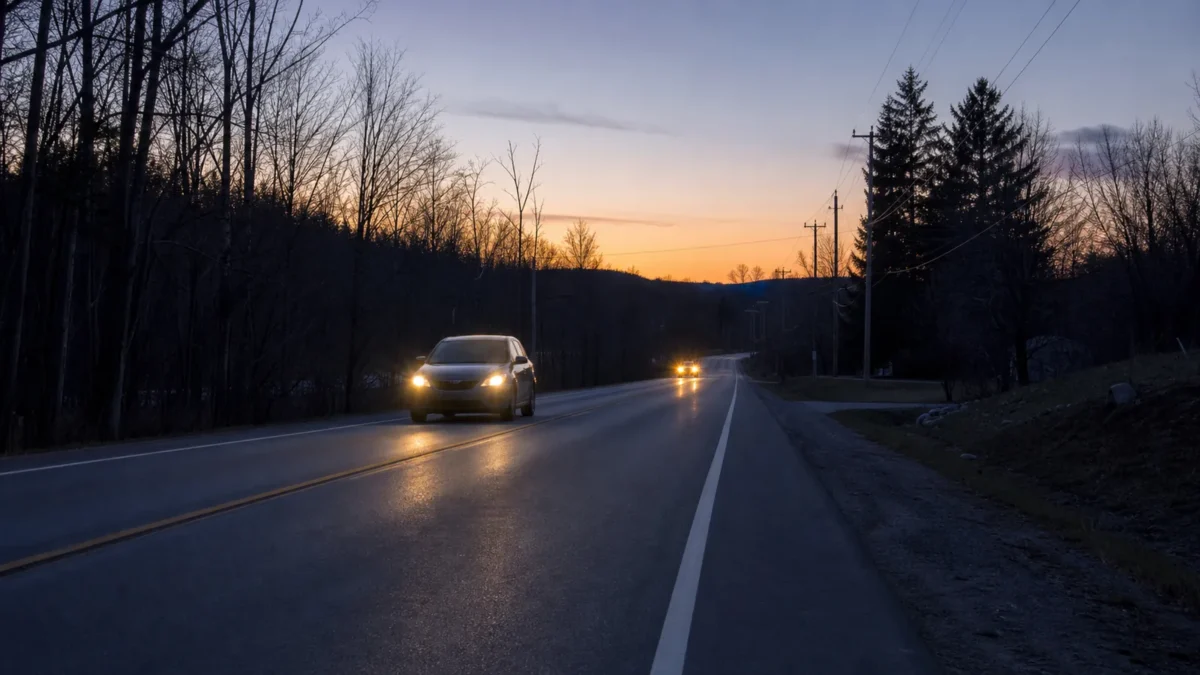
Ontario headlight rules are simple once you know the two numbers behind them, and they are easy marks on the G1 test. They also keep you visible and stop you from blinding other drivers. Here is when your lights must be on, and when to switch between high and low beams.
When your headlights must be on
Turn your headlights on from half an hour before sunset until half an hour after sunrise. You also have to use them any time you cannot see clearly for 150 metres, which covers fog, heavy rain and snow even in the middle of the day. If you are not sure, switch them on early. Being seen is the whole point, and there is no penalty for using them when you did not strictly need to.
Daytime running lights are not enough
Many cars have daytime running lights that come on automatically, but those are not the same as headlights. They usually leave your tail lights off, so at night the car behind you cannot see you. Always turn the headlights fully on after dark rather than trusting the automatic daytime lights. This is one of the details covered in what new drivers get wrong at night.
When to dim your high beams
High beams help you see far on a dark, empty road, but they blind other drivers if you leave them on at the wrong time. Switch to low beams when you come within 150 metres of an oncoming vehicle, and switch to low beams within 60 metres when you are following another vehicle. If an oncoming driver forgets to dim theirs, look to the right edge of your lane rather than into the glare.
Lights in bad weather
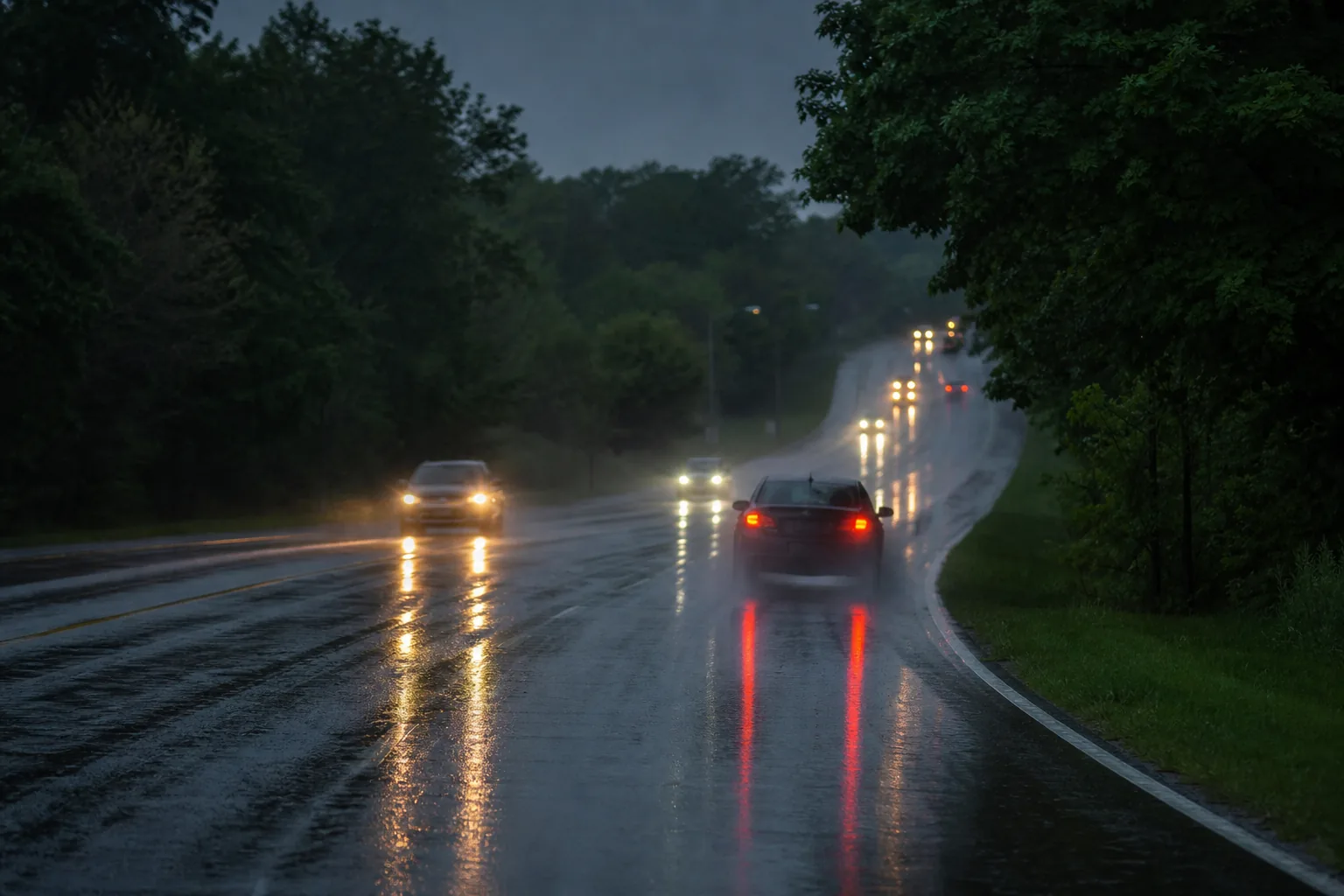
In fog, heavy rain or snow, low beams work better than high beams, because high beams reflect off the water or fog and make it harder to see. Turn your headlights on, keep them low, and slow down. The same visibility habits apply to driving in wet weather, where being seen matters as much as seeing.
Do not drive on parking lights alone
Parking lights are meant for a car stopped at the roadside, not for driving. Some new drivers switch them on at dusk and think they are set, but parking lights do not put enough light on the road and they can leave other drivers unsure whether you are moving. Use your full headlights whenever the car is in motion in low light, and save the parking lights for when you are actually parked.
Why the Ontario headlight rules are on the test
The G1 knowledge test checks that you know when to light up and when to dim, because both protect people. Remember the window from half an hour before sunset to half an hour after sunrise, the 150 metre visibility rule, and the 150 and 60 metre limits for high beams, and you have it.
Keep reading: winter driving for new Ontario drivers and how Ontario demerit points work.
Based on the Official MTO Driver’s Handbook and Ontario’s rules for lights on vehicles. Last reviewed July 2026.
A. Shabana
A. Shabana leads editorial at FreeG1, where he turns the official MTO Driver's Handbook and the realities of Ontario's G1 test into clear, practical guides. He writes for first-time and newcomer drivers who want the rules explained simply and accurately, without the filler. Every article is checked against current Ontario government sources, so readers can trust what they're studying.
More from FreeG1
Ready to pass your G1 knowledge test?
FreeG1 is free: practice questions, every Ontario traffic sign, and full mock exams.