How to Reverse Safely in Ontario
Backing up is where slow, careful drivers still get caught out. Here is how to reverse safely in Ontario: where to look, how slow to go, and who to yield to.

Reversing is slow, which makes drivers relax, and that is exactly when it goes wrong. You are moving toward a space you cannot fully see, often where people walk behind cars. Done properly it is one of the safest things you do, because you are going at walking speed. Here is how to reverse safely in Ontario.
Check all around before you move
Before you touch the gear, walk your eyes around the whole car. Look behind it, to both sides, and check for pedestrians, children, cyclists or anything low that a mirror will miss. A child or a post directly behind the bumper sits in a blind spot you cannot see from the seat, so the look before you start is the most important part of the whole manoeuvre.
Look over your shoulder, not just the mirrors
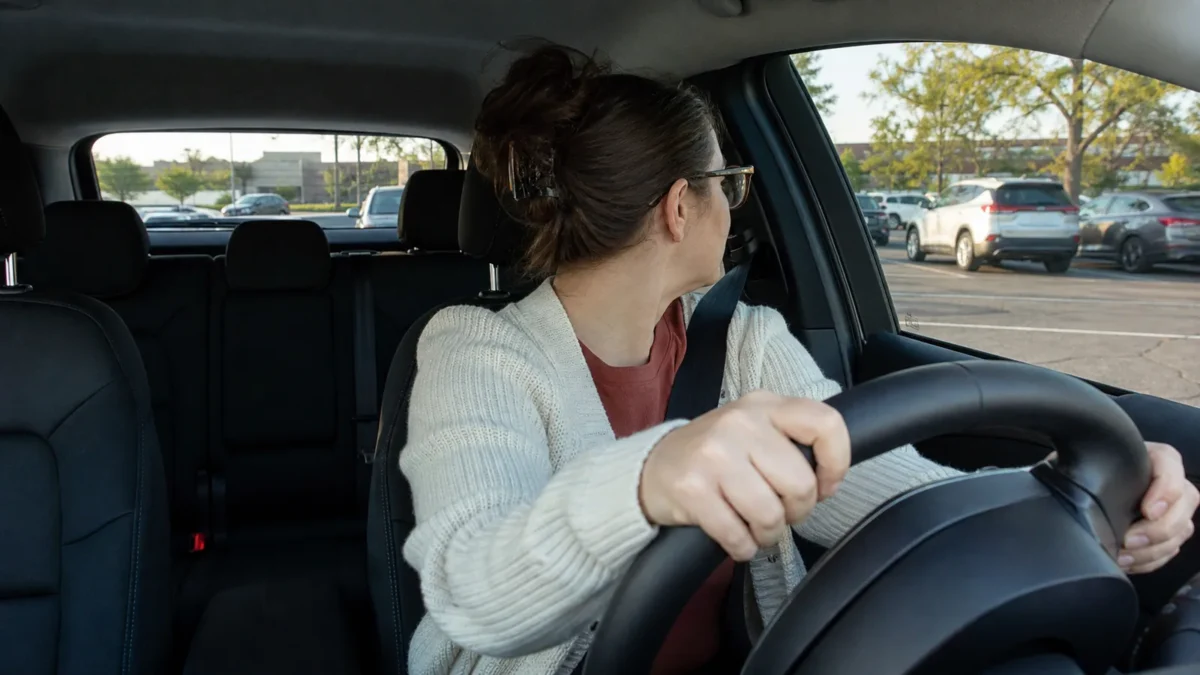
Once you are moving, turn your body and look back over your right shoulder through the rear window. Mirrors and a backup camera help, but they all have blind spots and a narrow view, so they support the shoulder check rather than replace it. Keep glancing around as you go, because the picture behind you changes as people and cars move.
Back up slowly and only as far as you need
Reverse at a crawl, barely off the brake, so you can stop instantly if someone appears. Steer gently, because the car responds sharply in reverse, and straighten out early. Back up only as far as you actually need to, then shift forward. The longer you reverse, the more you are exposed, so keep it short. If you cannot see clearly behind you, it is better to stop, get out and look, or ask someone to guide you, than to keep rolling back blind.
Yield to everyone
A reversing driver has no right of way at all. You must yield to pedestrians on the sidewalk behind you and to any traffic in the lane you are backing into. Wait for a real gap, the same way you would when doing a shoulder check to change lanes, and never assume other people can tell what you are about to do.
Where you must not reverse
Some places are off limits. Never reverse on a freeway or highway, and never back up in or through an intersection, even if you missed your turn. If you overshoot, carry on and find a safe, legal place to turn around instead. Backing into fast or crossing traffic is the kind of move that causes a collision you never saw coming.
Why reversing is on the test
The G1 knowledge test covers reversing because the habits behind it prevent low-speed collisions that hurt people. Remember to check all around first, look over your shoulder through the back window, back up slowly and briefly, yield to everyone, and never reverse on a highway or in an intersection.
Keep reading: how to make a right turn and where you cannot park or stop.
Based on the Official MTO Driver’s Handbook and Ontario’s rules for backing up. Last reviewed July 2026.
A. Shabana
A. Shabana leads editorial at FreeG1, where he turns the official MTO Driver's Handbook and the realities of Ontario's G1 test into clear, practical guides. He writes for first-time and newcomer drivers who want the rules explained simply and accurately, without the filler. Every article is checked against current Ontario government sources, so readers can trust what they're studying.
More from FreeG1
Ready to pass your G1 knowledge test?
FreeG1 is free: practice questions, every Ontario traffic sign, and full mock exams.