Winter Driving in Ontario: What New Drivers Need to Know
Your first Ontario winter is the hardest driving you will do. Clearing the whole car, slowing down, spotting black ice, handling a skid, winter tires and an emergency kit.

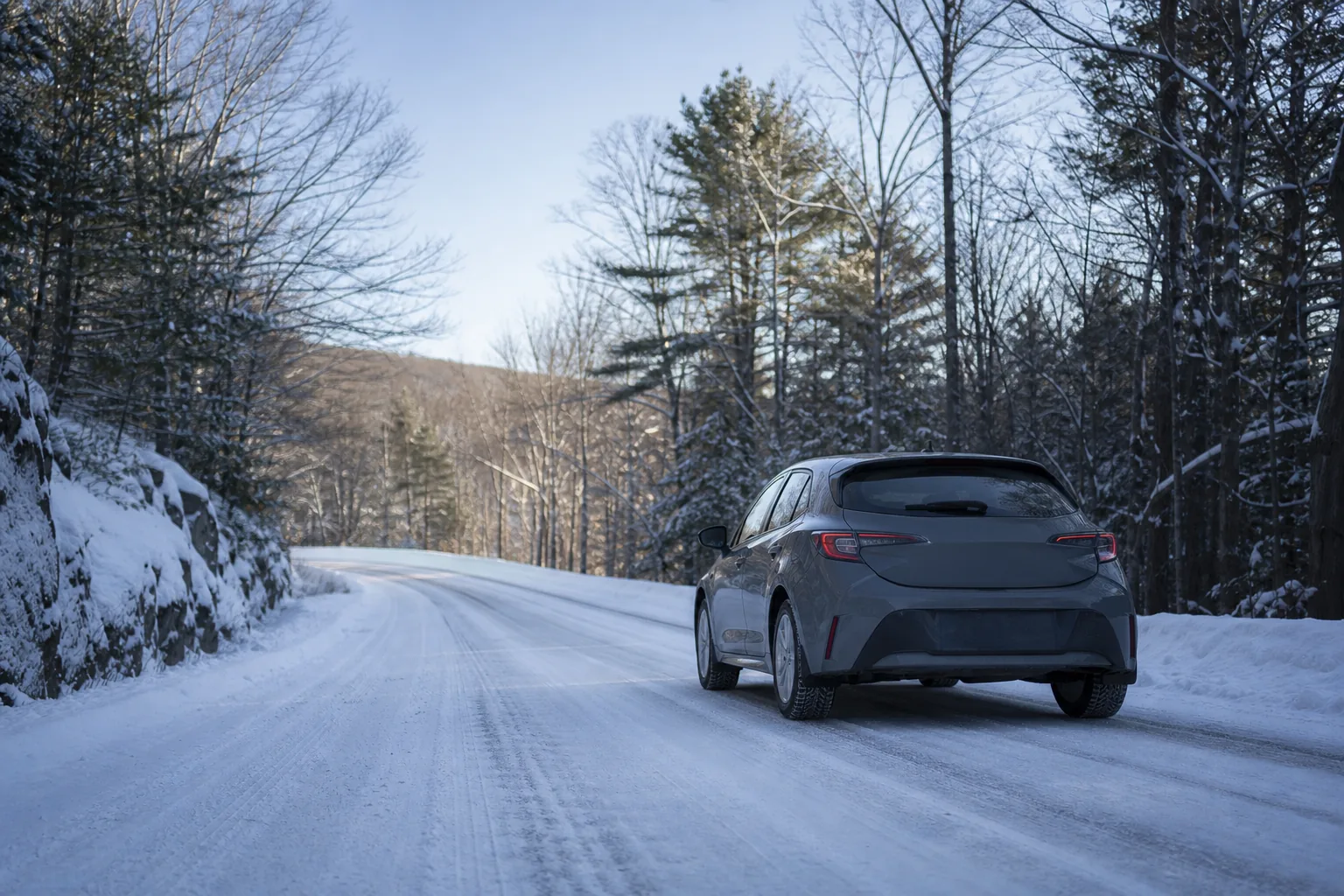
Your first Ontario winter behind the wheel is the hardest driving you will do as a new driver. Snow, ice, and short dark days turn familiar roads into something you have to relearn. The knowledge test does not cover winter driving in much depth, but the road certainly will. Here is what actually keeps you safe when the temperature drops.
Before you move: clear the whole car
Clean every window, your mirrors, your lights, and the roof. Snow left on the roof slides onto your windshield when you brake, or onto the car behind you when you accelerate. Give the car a minute to warm up and the glass to defrost so you are not driving half-blind. Starting a winter drive with a peephole scraped in the frost is how new drivers cause avoidable crashes.
Slow down and leave much more room
On snow and ice, everything takes longer: accelerating, turning, and above all stopping. Braking distance can be several times what it is on dry pavement. Drop your speed well below the posted limit when conditions are bad, and stretch your following distance from the usual three seconds to six or more. Speed is the single biggest factor you control in winter, and slowing down solves most problems before they start.
Watch for black ice
Black ice is a thin, clear layer that looks like wet pavement, and it forms first where you least expect it: on bridges and overpasses, in shaded spots, and in the early morning after a cold night. If the road looks wet but the temperature is near or below freezing, treat it as ice. Ease off the gas, avoid sudden moves, and do not brake or steer hard.
If you start to skid
Skids feel frightening, but the response is simple and it is the opposite of your instinct. Take your foot off the gas, do not slam the brakes, and steer gently in the direction you want the front of the car to go. Sudden inputs make a skid worse. Smooth, calm corrections bring it back.
Get the car and yourself ready
- Winter tires: they grip far better than all-seasons below about seven degrees, and many insurers give a discount for using them.
- An emergency kit: a scraper and brush, a small shovel, sand or traction mats, a blanket, gloves, and a charged phone.
- A full washer reservoir with winter fluid, because slush coats your windshield fast.
- Time: leave earlier so you are never rushing on a bad road.
The winter mindset
Good winter driving is mostly patience. Slow down, look far ahead, make smooth inputs, and give yourself and everyone else room. Do that and Ontario winters become manageable rather than scary. Pass your G1 first, of course, and FreeG1 is free for that, covering every topic on the test with real practice questions and mock exams.
Keep reading: the Ontario winter tire law and insurance discount, driving at night and summer driving hazards.
General winter-driving guidance based on the Official MTO Driver’s Handbook and Ontario road-safety advice. Last reviewed July 2026.
A. Shabana
A. Shabana leads editorial at FreeG1, where he turns the official MTO Driver's Handbook and the realities of Ontario's G1 test into clear, practical guides. He writes for first-time and newcomer drivers who want the rules explained simply and accurately, without the filler. Every article is checked against current Ontario government sources, so readers can trust what they're studying.
More from FreeG1
Ready to pass your G1 knowledge test?
FreeG1 is free: practice questions, every Ontario traffic sign, and full mock exams.