Driving at Night: What New Drivers Get Wrong
Night driving is harder than it looks. Overdriving your headlights, high-beam etiquette, handling glare, spotting pedestrians and animals, and why fatigue is the hidden danger.

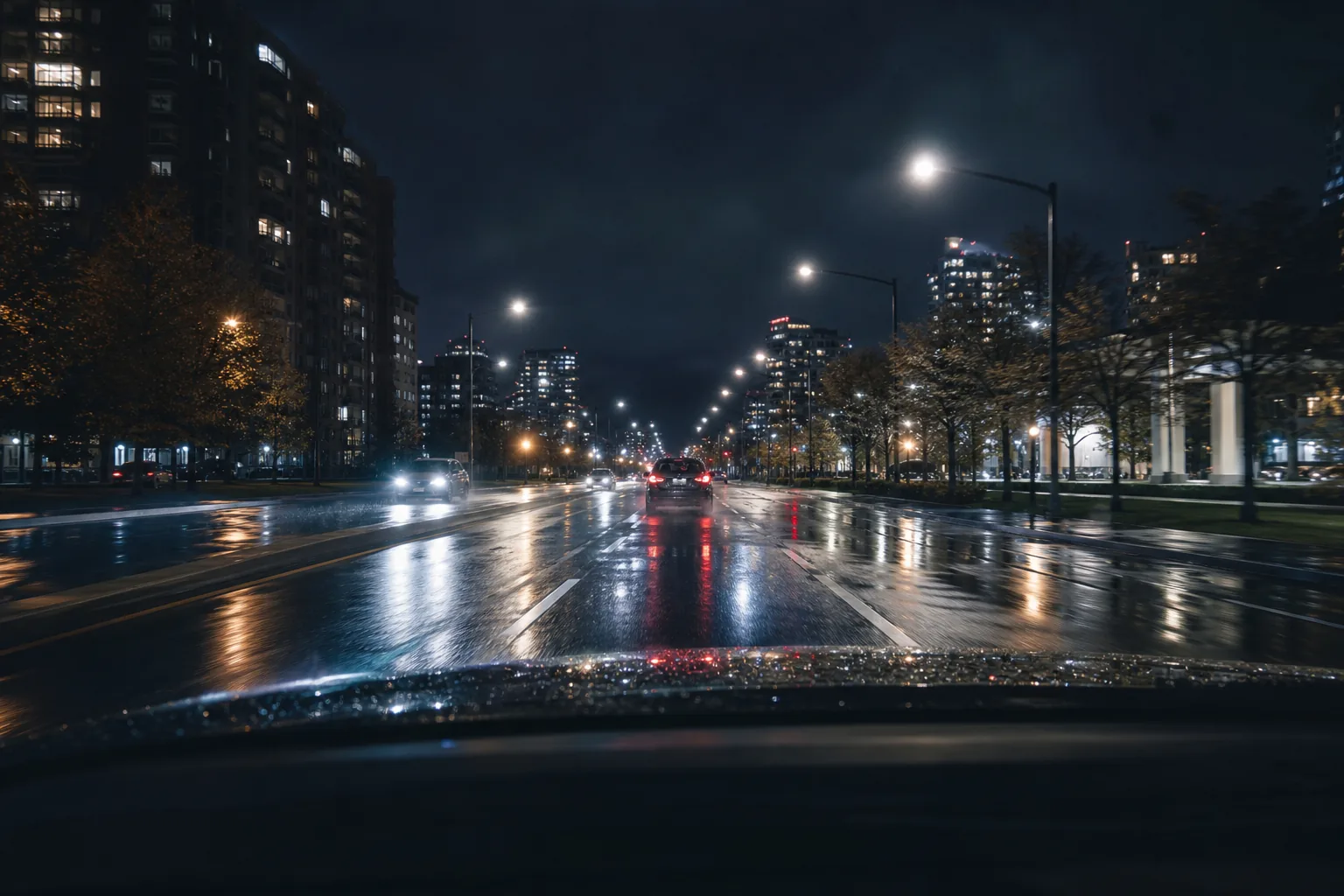
Driving at night is far harder than it looks, and it catches new drivers off guard because everything you rely on in daylight gets weaker. You see less, judge distance worse, and tire faster. As a G1 driver you cannot drive between midnight and 5 a.m. anyway, but plenty of dark hours fall outside that window, especially in an Ontario winter. Here is what new drivers get wrong after sunset, and how to fix it.
Do not overdrive your headlights
This is the big one. Your low beams light up only so much road ahead, and if you are driving fast enough that you could not stop within that lit distance, you are overdriving your headlights. If something appears at the edge of your light, it is already too late. The fix is simple: at night, slow down enough that you can always stop within the distance you can actually see.
Use your high beams, and dim them in time
On dark roads with no oncoming traffic, high beams help you see much farther, so use them. The etiquette matters though: dim to low beams when a vehicle approaches, and when you are following another car closely, so you do not blind other drivers. Switch back once they have passed. New drivers often forget they left the high beams on, or never use them at all.
Handle glare without staring into it
Bright oncoming headlights can dazzle you for several seconds, which is a long time at speed. Do not stare into them. Glance toward the right edge of your lane and use it to keep your position while the vehicle passes, then bring your eyes back up. Keeping your windshield clean, inside and out, makes a huge difference here, because a filmy windshield turns every light into a starburst.
Watch for what daylight would have shown you
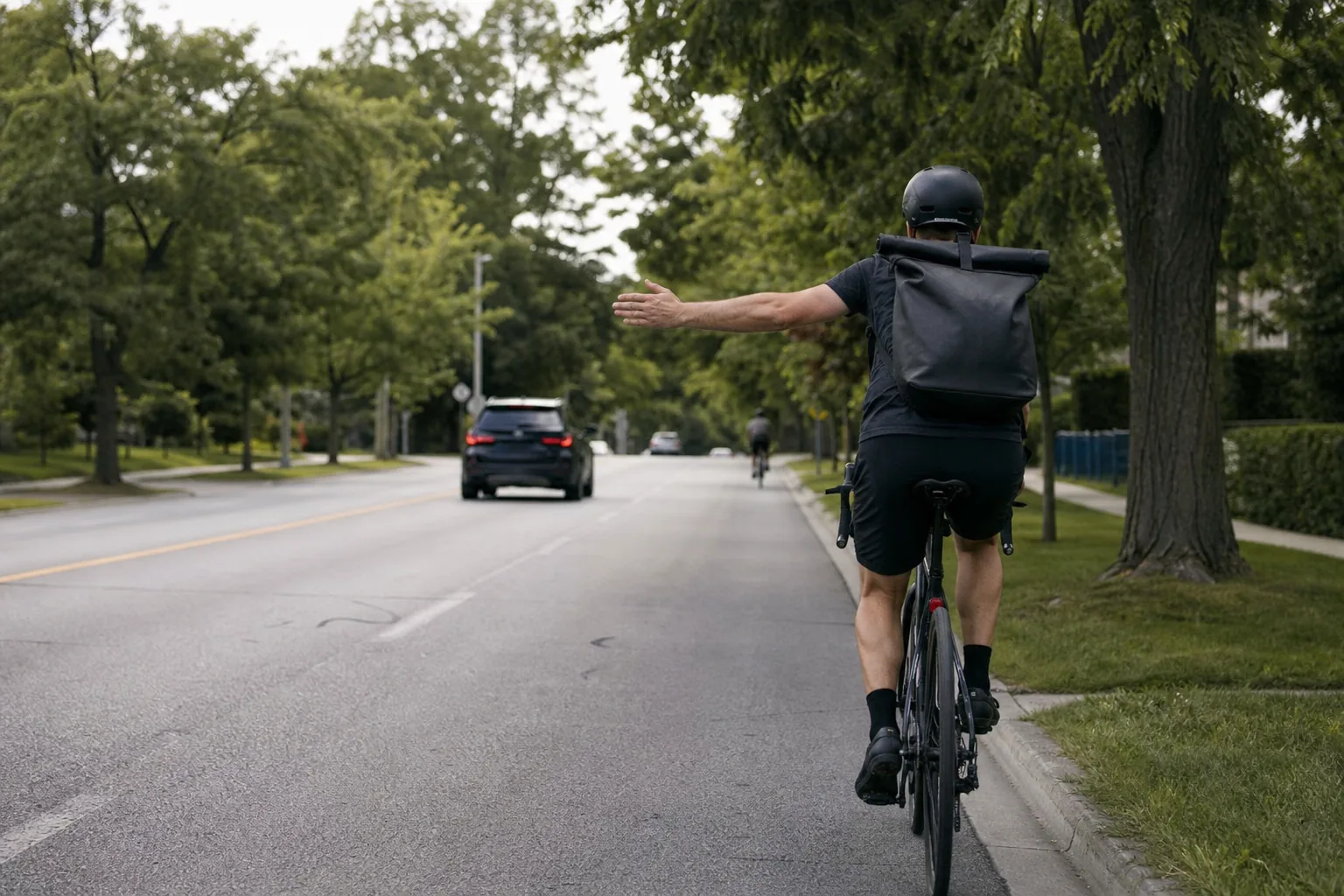
Pedestrians, cyclists, and animals are all much harder to see at night, and they do not always have lights. Scan the edges of the road, especially near crosswalks, shoulders, and rural areas where deer cross. Slow down where your view is limited by hills, curves, or unlit stretches.
Respect fatigue
Night driving and tiredness go together, and drowsy driving impairs you in a way that feels a lot like alcohol: slower reactions, wandering attention, microsleeps you do not even notice. If you are yawning, drifting, or missing turns, that is not something to push through. Pull over somewhere safe and rest. No trip is worth falling asleep at the wheel.
The night-driving mindset
Everything about night driving rewards slowing down and looking farther ahead. Clean glass, sensible high-beam use, extra following distance, and honest attention to fatigue turn a stressful drive into a routine one. Master the basics on your G1 first, and FreeG1 is free for that, with practice questions and mock exams covering the whole test.
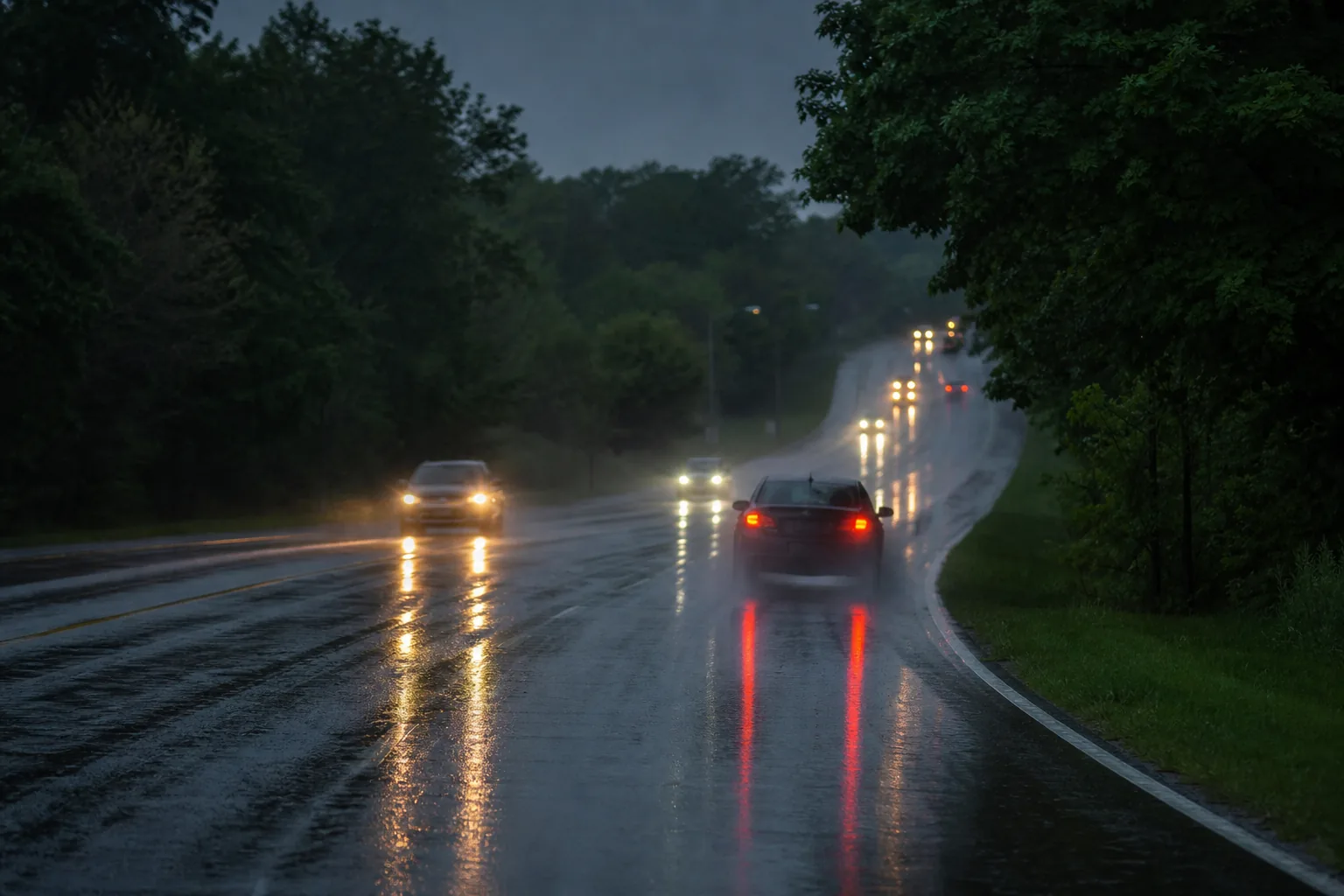
Keep reading: driving in wet weather and winter driving.
General night-driving guidance based on the Official MTO Driver’s Handbook. Last reviewed July 2026.
A. Shabana
A. Shabana leads editorial at FreeG1, where he turns the official MTO Driver's Handbook and the realities of Ontario's G1 test into clear, practical guides. He writes for first-time and newcomer drivers who want the rules explained simply and accurately, without the filler. Every article is checked against current Ontario government sources, so readers can trust what they're studying.
More from FreeG1
Ready to pass your G1 knowledge test?
FreeG1 is free: practice questions, every Ontario traffic sign, and full mock exams.