
How Four-Way Stops Work in Ontario (and Who Goes First)
Four-way stops run on two simple rules: first to stop goes first, and a tie goes to the right. Plus how left turns yield to straight-through traffic, and when to just yield.

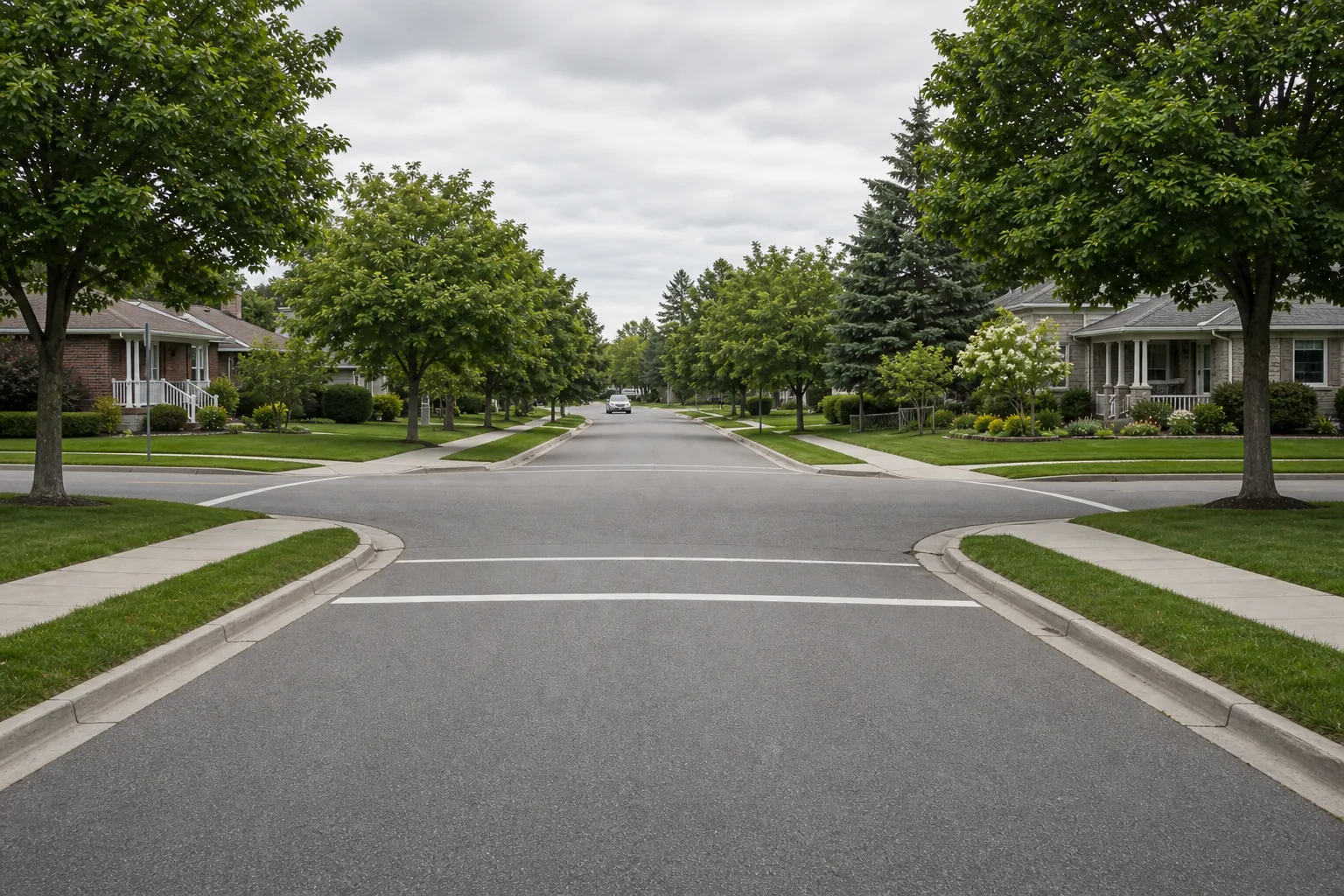
Few things fluster a new driver like pulling up to a four-way stop with three other cars already there. Who goes? The good news is that four-way stops run on two simple rules, plus a bit of courtesy. Learn them and you will move through confidently instead of doing the nervous little wave everyone recognizes. Here is how they work.
First: everyone stops, completely
Every driver at a four-way stop must come to a full stop behind the line or crosswalk, not a slow roll. The order of who goes next only makes sense once everyone has actually stopped, and a rolling stop is both a ticket and the fastest way to cause confusion.
Rule one: first to stop, first to go
The driver who comes to a complete stop first has the right to go first. If you clearly arrived and stopped before the others, proceed when it is safe. If you were clearly second or third, wait your turn. Most four-way stops sort themselves out entirely on this one rule.
Rule two: a tie goes to the right
When two vehicles stop at about the same time, the driver on the right goes first. So if you and another car reach the stop together and that car is on your right, you yield and let them go. This is the same yield-to-the-right idea that governs uncontrolled intersections, and it settles almost every tie.
Straight through beats turning across
One more situation: if two vehicles are facing each other and stop at the same time, and one is going straight or turning right while the other wants to turn left across traffic, the straight-through or right-turning driver goes first. The left-turner yields, because they are the one crossing the other’s path.
Then go one at a time, and communicate
Four-way stops work best when drivers take turns one at a time and make it obvious what they are doing. A little eye contact, a clear move when it is your turn, and patience when it is not, keep everyone safe. If two drivers both hesitate, someone has to go, but never assume: only move when you can see the other driver is actually waiting.
When in doubt, yield
If you genuinely cannot tell who arrived first, yield. It costs you a couple of seconds and removes all the risk. Four-way stops and right of way show up often on the G1, and to drill them with real questions, FreeG1 is free and covers the whole test with practice questions and mock exams.
Keep reading: the full right-of-way rules and how roundabouts work.
Based on the Official MTO Driver’s Handbook. Last reviewed July 2026.
A. Shabana
A. Shabana leads editorial at FreeG1, where he turns the official MTO Driver's Handbook and the realities of Ontario's G1 test into clear, practical guides. He writes for first-time and newcomer drivers who want the rules explained simply and accurately, without the filler. Every article is checked against current Ontario government sources, so readers can trust what they're studying.
More from FreeG1


Ready to pass your G1 knowledge test?
FreeG1 is free: practice questions, every Ontario traffic sign, and full mock exams.