Merging onto a Highway Without the Panic
Merging is about matching speed and flowing in, not squeezing. Use the on-ramp to reach highway speed, signal and shoulder-check, find a gap, and never stop on the ramp.

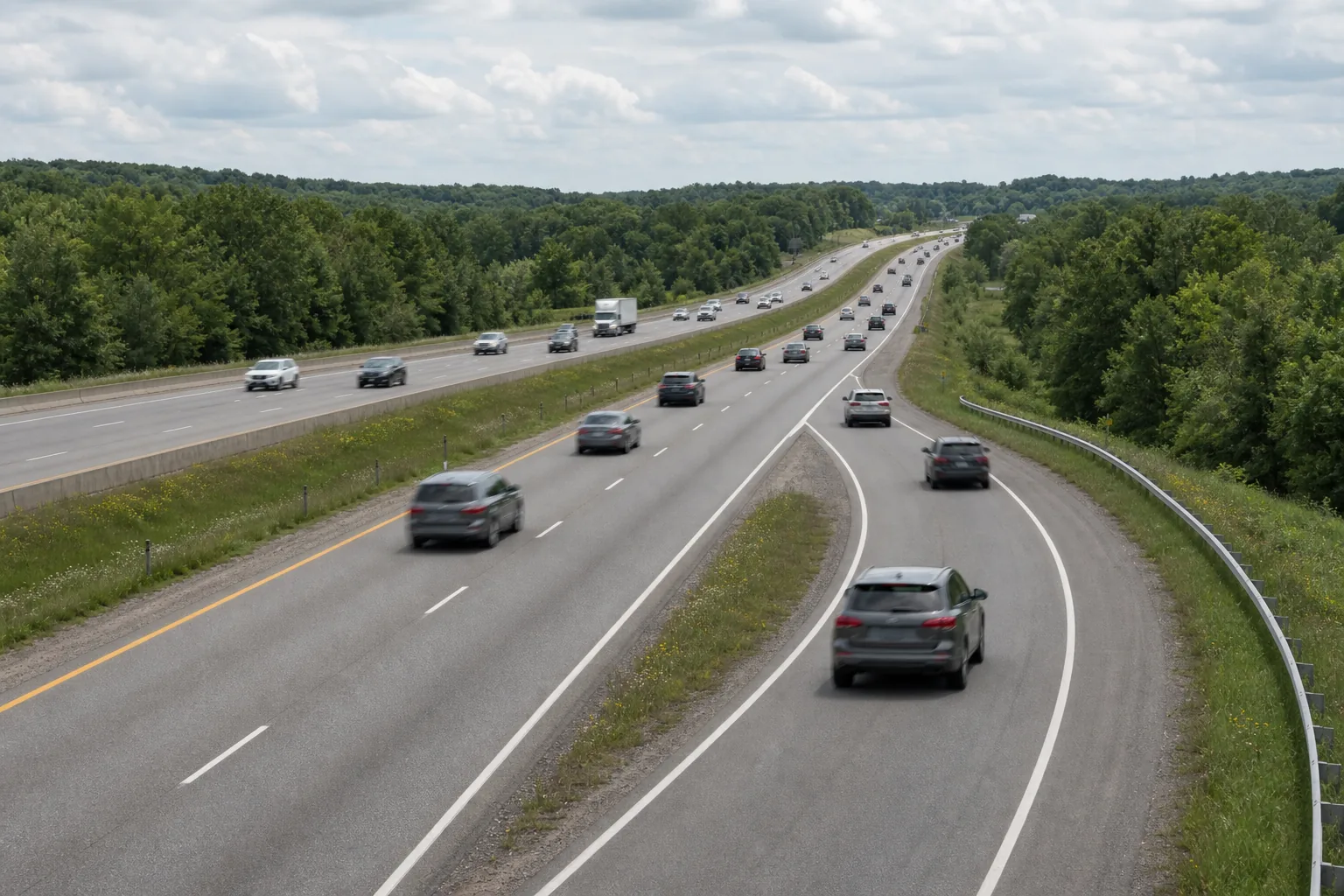
Merging onto a highway is the moment new drivers dread most, and it is where nervous habits do the most harm. As a G1 driver you cannot use 400-series highways with limits over 80 km/h, but you will merge onto other highways now, and you will need this skill cold for your G2 road test. The secret is that merging is not about squeezing in. It is about matching speed and flowing in. Here is how to do it without the panic.
Use the on-ramp to get up to speed
The on-ramp exists for one job: to let you reach the speed of the traffic you are joining. Use all of it. Accelerate steadily so that by the end of the ramp you are moving at roughly the same speed as the highway traffic. Merging slowly is the classic new-driver mistake, and it is dangerous, because a car doing 60 trying to join traffic doing 100 forces everyone else to react.
Look early and signal
While you build speed, look ahead into the lane you are joining and start picking your gap. Turn on your signal early so the drivers already on the highway know you are coming and can make room. Check your mirror and, crucially, your blind spot with a shoulder check before you move over. Your mirrors do not show everything.
Find a gap and flow into it
Adjust your speed slightly to line up with a gap in traffic rather than aiming for the exact spot beside another car. A small change in speed, faster or slower, usually opens a comfortable gap. When it is clear, merge smoothly with one steady movement. Avoid drifting halfway and hesitating, which leaves you stuck in a blind spot.
Never stop on the ramp unless you truly must
Stopping at the end of an on-ramp, unless traffic is completely stopped or there is a yield or stop sign, is one of the most dangerous things you can do, because you have no room left to accelerate and the driver behind you expects you to keep going. If you have run out of ramp and cannot merge, that means you did not build enough speed early enough. Plan to be moving.
Share the road at the merge
Merging works best when everyone cooperates. Drivers already on the highway should make room where they safely can, and where two lanes combine into one, taking turns, one from each lane, keeps traffic moving. Do not force your way in, and do not sit in someone’s blind spot waiting for a perfect gap that never comes.
Practice makes it routine
Merging feels frightening exactly until it does not, and that switch comes with repetition. Match speed, signal, check your blind spot, and flow in. First, pass your G1, and FreeG1 is free for that, covering every topic on the test with practice questions and full mock exams.
Keep reading: highway speed limits and safe following distance.
Based on the Official MTO Driver’s Handbook. Last reviewed July 2026.
A. Shabana
A. Shabana leads editorial at FreeG1, where he turns the official MTO Driver's Handbook and the realities of Ontario's G1 test into clear, practical guides. He writes for first-time and newcomer drivers who want the rules explained simply and accurately, without the filler. Every article is checked against current Ontario government sources, so readers can trust what they're studying.
More from FreeG1

Ready to pass your G1 knowledge test?
FreeG1 is free: practice questions, every Ontario traffic sign, and full mock exams.