
How Ontario Speeding Fines and Demerit Points Add Up
Ontario speeding fines and demerit points climb the faster you go. Here is how the points scale, why zones double the fine, and where it turns into stunt driving.

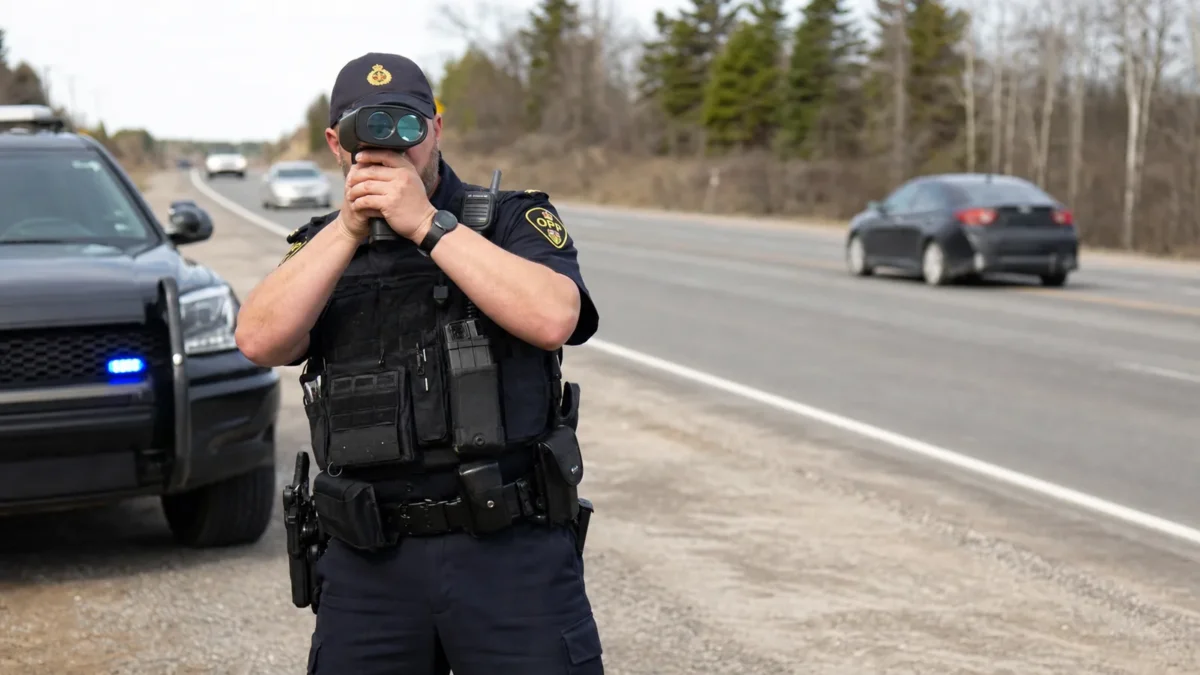
Speeding is the ticket new drivers pick up most, and Ontario speeding fines are built to climb the faster you go. The demerit points rise in steps, the dollar amount grows with every kilometre over, and at a certain point it stops being a ticket and becomes a criminal-level charge. Here is how the whole scale works.
How the demerit points scale
The points depend on how far over the limit you were caught. Going 16 to 29 km/h over the limit adds three demerit points. From 30 to 49 km/h over it is four points. At 50 km/h or more over it jumps to six points, which is a serious hit on any licence and close to the level that triggers a suspension. Knowing where the posted number is in the first place is half the battle, which is why the posted speed limit matters so much.
How the speeding fines grow
Ontario sets speeding fines by how many kilometres over the limit you were, so a small overage costs a little and a large one costs a lot more. The fine is also doubled in a community safety zone or a construction zone, so the same speed can cost twice as much depending on where you are. The points stay the same in those zones, but the dollar amount does not. If you do get a ticket, deal with it promptly, because an unpaid fine can lead to more penalties and even a licence suspension.
Where speeding becomes stunt driving
There is a hard line where speeding turns into stunt driving, and it is closer than most new drivers think. You are charged with stunt driving at 40 km/h over the limit where the limit is under 80, or at 50 km/h over where the limit is 80 or higher. That is only 40 over in a city and 50 over on a highway, which a heavy foot can reach without trying.
What stunt driving costs you
Stunt driving is not a normal ticket. The moment you are stopped, your licence is suspended at the roadside and your vehicle is impounded, before you ever see a courtroom. On top of that come large fines, six demerit points, and the risk of a much longer suspension once the charge is dealt with. For a new driver still in graduated licensing, one stunt charge can undo months of progress, which ties into how Ontario demerit points work.
Why speeding penalties are on the test
The G1 knowledge test wants you to understand that speeding is not one flat penalty but a scale that gets steep quickly. Remember three points at 16 over, four at 30 over, six at 50 over, doubled fines in safety and construction zones, and the stunt-driving line at 40 or 50 over, and you have the shape of it.
Keep reading: Ontario construction zone rules and how Ontario graduated licensing works.
Based on the Official MTO Driver’s Handbook and Ontario’s rules for speeding and stunt driving. Last reviewed July 2026.
A. Shabana
A. Shabana leads editorial at FreeG1, where he turns the official MTO Driver's Handbook and the realities of Ontario's G1 test into clear, practical guides. He writes for first-time and newcomer drivers who want the rules explained simply and accurately, without the filler. Every article is checked against current Ontario government sources, so readers can trust what they're studying.
More from FreeG1
Ready to pass your G1 knowledge test?
FreeG1 is free: practice questions, every Ontario traffic sign, and full mock exams.