The Types of Traffic Signs in Ontario and What They Mean
Signs fall into a few families, and the family tells you the job. Here are the types of traffic signs in Ontario, from regulatory to warning to guide signs.

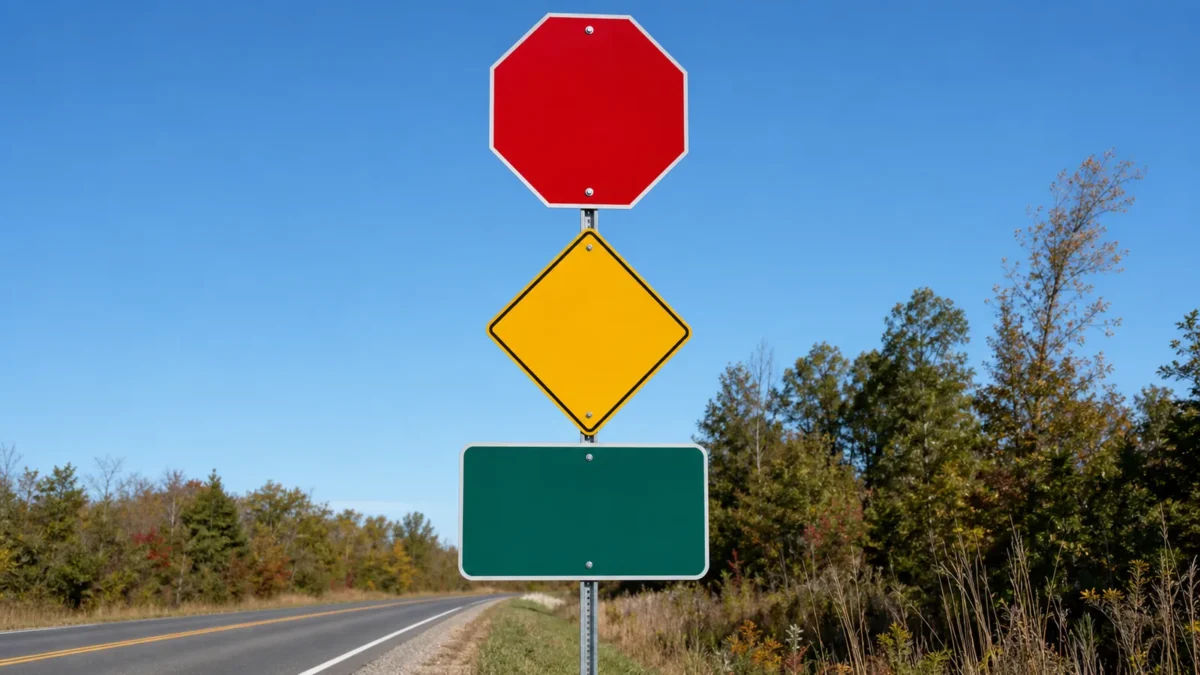
Ontario has hundreds of individual signs, but they sort into a handful of families, and the family tells you what job the sign is doing before you even read the words. Learn the groups and you can react correctly to a sign you have never seen. Here are the main types of traffic signs in Ontario and what each one is for.
Regulatory signs give the law
Regulatory signs tell you a rule you must obey, and breaking one is an offence. Stop signs, yield signs, speed limits, one-way arrows, no-parking and no-entry signs are all regulatory. They are usually white with black or red lettering, and a few keep their own shape so you can read them at a glance, like the red octagon for stop and the downward triangle for yield.
Warning signs flag what is ahead
Warning signs do not carry a penalty on their own, but they tell you a hazard or a change is coming so you can prepare. A curve, an intersection, a narrowing road, a deer crossing or a slippery surface all get a warning sign. Most are yellow diamonds, and the picture on them shows you exactly what to expect, which is why reading the shape and colour first is part of how Ontario traffic sign colours and shapes work.
Fluorescent yellow-green for people
A brighter yellow-green version of the warning sign is reserved for the most vulnerable road users. School zones, school crossings, pedestrian crossings and bicycle areas use this fluorescent colour so they stand out from ordinary warnings. When you see that colour, expect people on foot or on bikes, and slow down before you reach the sign.
Orange means temporary and construction
Orange signs mark temporary conditions, almost always construction or maintenance. They warn of workers, lane shifts, detours and reduced speeds, and they override the permanent signs while the work is there. Orange is the cue to slow down and pay closer attention, which ties into the wider Ontario construction zone rules.
Green, blue and brown guide you
The last family points the way rather than commanding you. Green signs give directions, distances and street names. Blue signs mark services like hospitals, gas and rest areas. Brown signs point to parks, attractions and tourist sites. None of these carry a rule, so they are the least urgent, but they are how you actually find where you are going.
Why the types of traffic signs are on the test
The G1 knowledge test leans hard on signs, and grouping them is the fastest way to study. Remember that regulatory signs are the law, yellow warns, fluorescent yellow-green means people, orange means construction, and green, blue and brown just guide you. Get the families straight and the individual signs stop being a memory test.
Keep reading: the signs that trip up new drivers and what the road markings and lines mean.
Based on the Official MTO Driver’s Handbook and Ontario’s traffic sign standards. Last reviewed July 2026.
A. Shabana
A. Shabana leads editorial at FreeG1, where he turns the official MTO Driver's Handbook and the realities of Ontario's G1 test into clear, practical guides. He writes for first-time and newcomer drivers who want the rules explained simply and accurately, without the filler. Every article is checked against current Ontario government sources, so readers can trust what they're studying.
More from FreeG1

Ready to pass your G1 knowledge test?
FreeG1 is free: practice questions, every Ontario traffic sign, and full mock exams.