
Where You Can’t Park or Stop in Ontario
No parking, no standing and no stopping are three different rules. Where you can never park in Ontario (hydrants, crosswalks, corners) and how to read the signs and curbs.

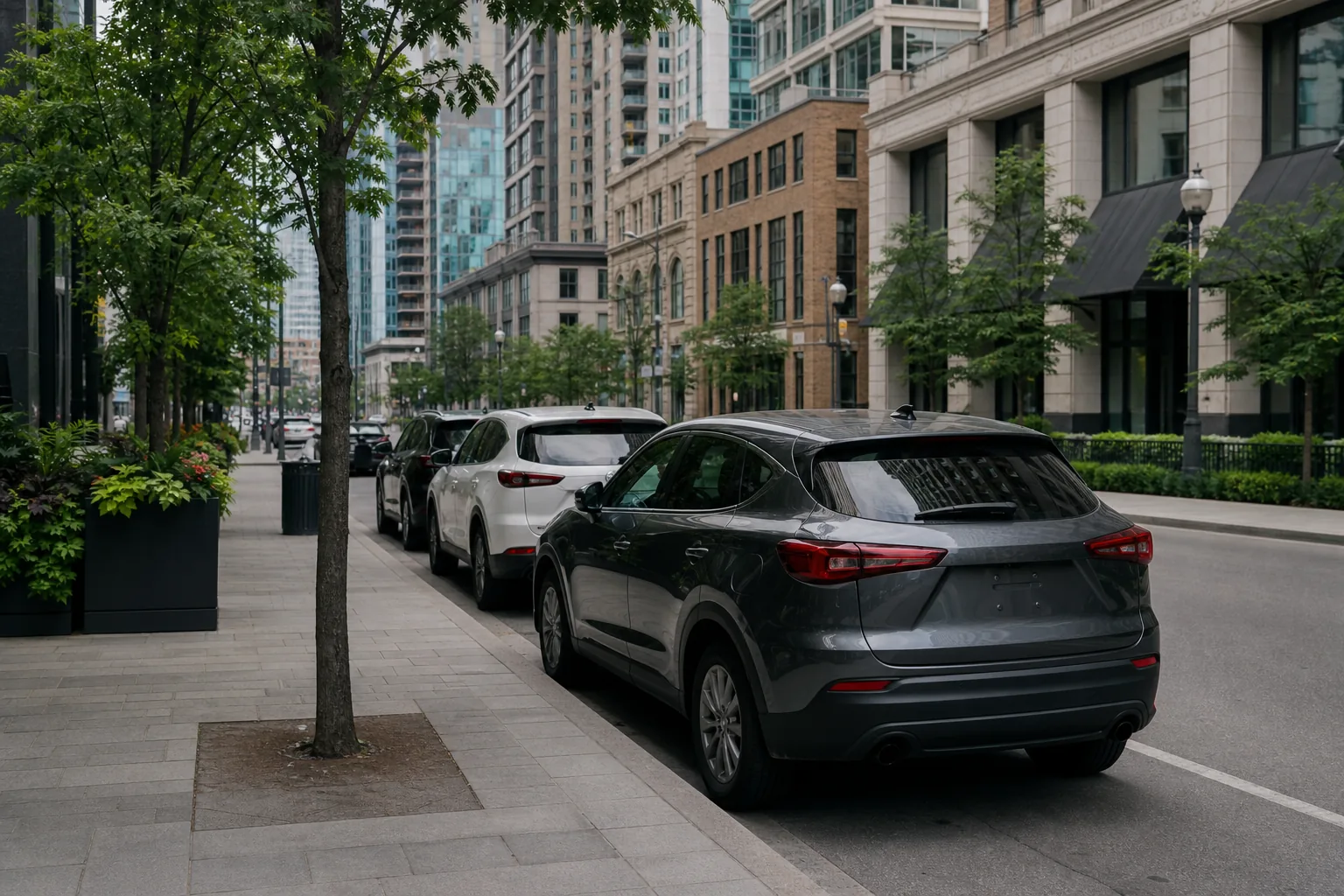
Parking seems like the easy part of driving until you come back to a ticket, or worse, cause a problem for someone who could not get around your car. Ontario has clear rules about where you cannot stop, stand, or park, and a few of them show up on the G1. Here is what to remember, and the difference between the three signs people mix up.
Stopping, standing, and parking are not the same
The signs use three different words on purpose. No parking means you cannot leave your car unattended, but you can stop briefly to load or unload people or goods while you stay with it. No standing is stricter: you can stop only long enough to pick up or drop off passengers. No stopping is the strictest of all: you cannot stop there at all, even for a moment, except to obey a sign or signal or to avoid a hazard. Read the exact word on the sign, because it changes what you are allowed to do.
Where you can never park
Some spots are off limits whether or not a sign is posted, because parking there creates a hazard or blocks people who need access:
- On or too close to a crosswalk, or within an intersection.
- Within three metres of a fire hydrant.
- Blocking a driveway, a sidewalk, or a curb ramp someone needs to cross.
- In front of or near a fire hall entrance.
- On a bridge, in a tunnel, or on the travelled part of a highway where you could be avoided by pulling off.
- In a disabled parking space without a valid permit.
- Too close to a corner, where you would hide other traffic or pedestrians.
- At a bus stop or in a way that blocks a school bus loading zone.
Read the curb and the signs
Beyond the universal rules, watch for posted signs and painted curbs that set local limits: time-limited parking, permit-only zones, rush-hour no-stopping stretches, and street-cleaning days. A sign that allows parking during some hours will say so, so read the whole sign, including the times, before you leave the car.
The safety idea behind all of it
Every parking rule traces back to the same goal: do not block the people who need to see, cross, or get through. A car parked too close to a corner hides a child about to cross. A car at a hydrant costs firefighters seconds they may not have. Park where you are not in anyone’s way and you will rarely go wrong.
Parking and stopping rules can appear on the G1 rules section. To drill them and the rest with real questions and clear explanations, FreeG1 is free and covers the whole test.
Keep reading: parking on a hill and which way to turn your wheels, the signs that mark no-stopping zones and the demerit points and fines.
Based on the Official MTO Driver’s Handbook. Confirm local by-law parking rules with your municipality. Last reviewed July 2026.
A. Shabana
A. Shabana leads editorial at FreeG1, where he turns the official MTO Driver's Handbook and the realities of Ontario's G1 test into clear, practical guides. He writes for first-time and newcomer drivers who want the rules explained simply and accurately, without the filler. Every article is checked against current Ontario government sources, so readers can trust what they're studying.
More from FreeG1

Ready to pass your G1 knowledge test?
FreeG1 is free: practice questions, every Ontario traffic sign, and full mock exams.