Pedestrian Crossover vs Crosswalk: What Ontario Drivers Must Know
A pedestrian crossover and a crosswalk are not the same in Ontario. Here is the difference, when you must stop and wait, and the penalty for getting it wrong.

A pedestrian crossover and a crosswalk sound like the same thing, but Ontario treats them differently, and the difference decides when you have to come to a full stop. Mixing them up is a common way new drivers lose points, so here is the plain version of each and what the law asks of you.
What a pedestrian crossover is
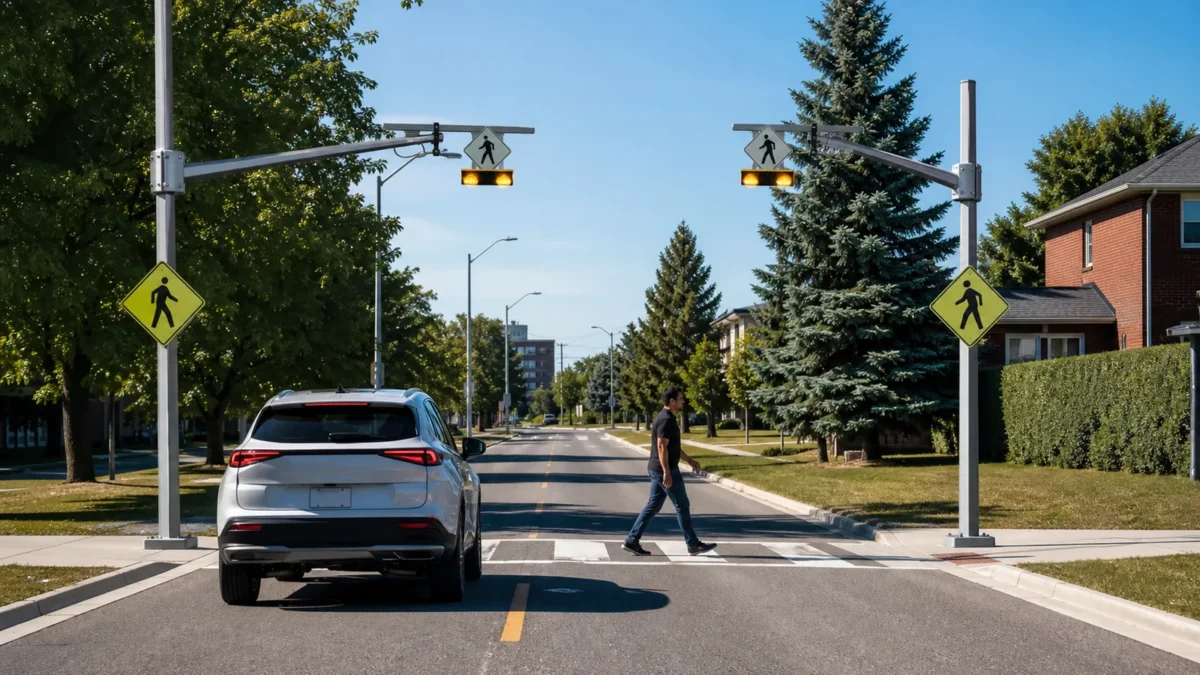
A pedestrian crossover is a specific, marked place for people to cross, usually in the middle of a block rather than at an intersection. You can spot one by its signs, the painted markings on the road, and often overhead flashing lights with a push button. At a pedestrian crossover you must stop and yield the whole width of the road, then wait until the person has completely crossed before you move. This applies to cyclists as well as drivers.
What a crosswalk is
A crosswalk is the part of an intersection where people cross, whether it is painted or not. Here you must yield to pedestrians, but you do not have to wait for them to clear the entire road the way you do at a crossover. Once they are safely out of your path, you can go. The full stop-and-wait rule also applies at school crossings when a crossing guard is holding out a stop sign, so treat those exactly like a crossover.
The simple way to tell them apart
Ask one question: is this a designated crossover with its own signs and lights, or just the crossing area at an intersection? At the crossover, you stop and wait for the whole crossing to finish. At the intersection crosswalk, you yield and go when the person is past you. Knowing who has priority here is part of right of way in Ontario explained.
What it costs to get it wrong
Failing to yield at a pedestrian crossover or a school crossing carries three demerit points and a fine of 150 to 500 dollars, and the fine is doubled in a community safety zone. Three points on a new licence add up fast, which is easier to picture once you understand how Ontario demerit points work.
What to do when you are on foot
The same rules help you cross safely as a pedestrian. At a pedestrian crossover, put your arm out to show you want to cross, make eye contact with drivers, and wait until traffic has fully stopped before you step off the curb. Drivers have to give you the whole road, but a quick check protects you from the one who is not paying attention. Treat every crossing as a shared responsibility rather than an automatic right, whichever side of the wheel you are on.
Why the pedestrian crossover rule is on the test
The G1 knowledge test wants to see that you protect people on foot, and the pedestrian crossover is the clearest case. Remember that a crossover means a full stop and a full wait, while a plain crosswalk means yield and proceed, and you have the answer the test is looking for.
Keep reading: how Ontario traffic sign colours and shapes work and the signs that catch new drivers.
Based on the Official MTO Driver’s Handbook and Ontario’s rules for pedestrian crossings. Last reviewed July 2026.
A. Shabana
A. Shabana leads editorial at FreeG1, where he turns the official MTO Driver's Handbook and the realities of Ontario's G1 test into clear, practical guides. He writes for first-time and newcomer drivers who want the rules explained simply and accurately, without the filler. Every article is checked against current Ontario government sources, so readers can trust what they're studying.
More from FreeG1
Ready to pass your G1 knowledge test?
FreeG1 is free: practice questions, every Ontario traffic sign, and full mock exams.